

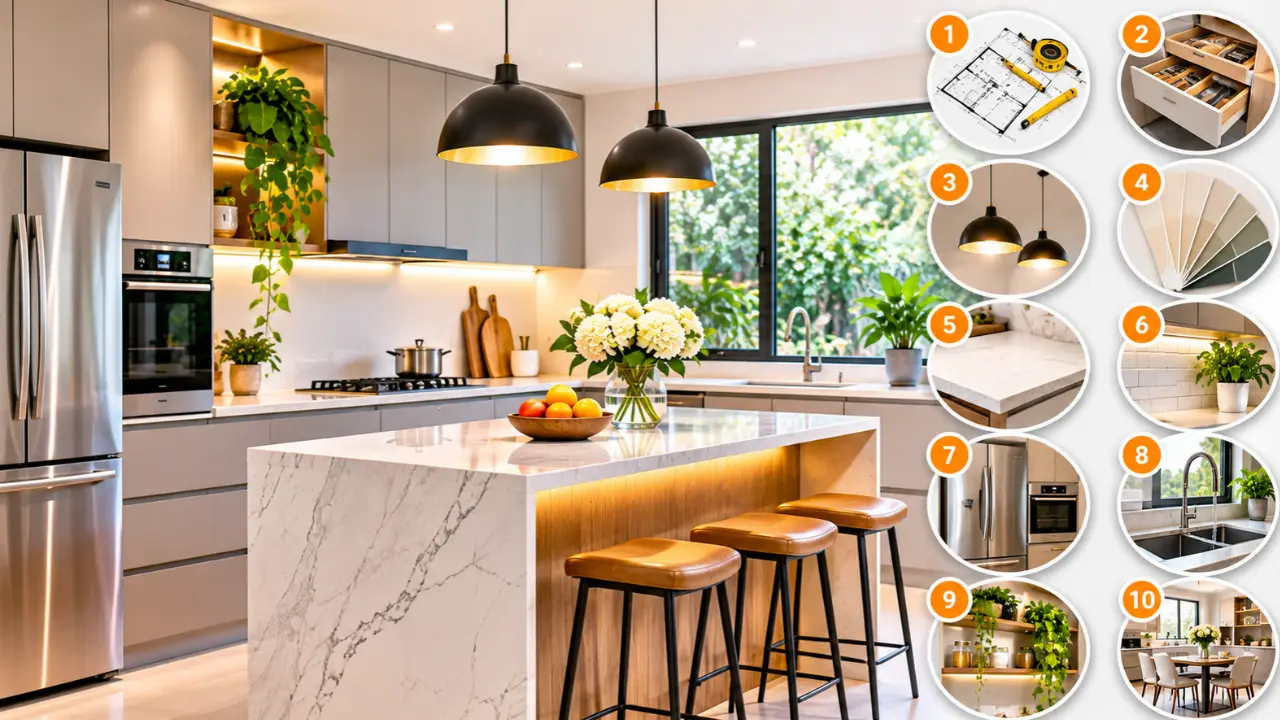
The kitchen is more than a place to cook. It’s where the family gathers, where coffee is made in the morning and where friends always seem to end up at parties. That’s why good kitchen design needs to look great and work hard at the same time. Whether you’re planning a full renovation or a simple refresh, these ten tips will help you create a kitchen that’s practical, stylish and a joy to use.
1. Plan Around the Work Triangle
The “work triangle” connects the three busiest spots in your kitchen: the sink, the stove and the fridge.
Keeping these close, but not cramped, saves you steps while cooking. As a general guide, each side of the triangle should be roughly 1.2 to 2.7 metres long, with no cabinets or islands blocking the path.
In smaller or galley kitchens, simply keeping these three areas within easy reach makes cooking much smoother.
2. Choose the Right Layout
Your layout should suit your space and the way you cook.
- L-shaped: Works well in most homes and opens up space for a dining table
- U-shaped: Offers plenty of counter and storage space
- Galley: Ideal for narrow kitchens and very efficient for cooking
- Island kitchens: Great for larger spaces, adding prep space and casual seating
- Single-wall: Perfect for small flats and open-plan living
3. Maximise Storage
You can never have too much kitchen storage, but it needs to be smart storage.
Use tall cabinets that reach the ceiling to make the most of vertical space. Deep drawers are often easier to use than low cupboards for pots and pans.
Add pull-out pantry shelves, corner carousels and drawer dividers to keep everything organised and easy to find.
4. Make Counter Space a Priority
Counters are where the real work happens, from chopping vegetables to rolling dough.
Try to leave clear space on both sides of the stove and next to the sink. Keep the counters as clutter-free as possible by storing small appliances you don’t use every day.
If space is tight, a rolling kitchen trolley or fold-down wall table can add extra prep space when you need it.
5. Layer Your Lighting
Good lighting makes a kitchen safer and more inviting.
Use three layers of light:
- Ambient lighting, such as ceiling lights, to light the whole room
- Task lighting, like under-cabinet LED strips, for chopping and cooking
- Accent lighting, such as pendant lights over an island, for style and mood
Make the most of natural light too, by keeping windows clear and using light window treatments.
6. Pick Durable Materials
Kitchens deal with heat, water, spills and daily wear, so choose materials that can handle it.
Quartz and granite countertops are tough and resist scratches. Laminate is a budget-friendly option that’s easy to clean. For floors, porcelain tiles, vinyl and sealed wood are all practical choices.
Choose cabinet finishes that are easy to wipe down, especially near the cooking area.
7. Choose a Colour Scheme That Lasts
Kitchens aren’t updated often, so pick colours you’ll love for years.
Whites, creams and soft greys keep a kitchen bright and timeless. Wood tones add warmth. If you love bold colour, try it on an island, lower cabinets or a feature wall, so it’s easier to change later.
Light colours also help small kitchens feel larger and more open.
8. Add Personality With a Backsplash
A backsplash protects your walls from splashes and grease, but it’s also a great chance to add style.
Subway tiles are classic and affordable. Patterned or handmade tiles add character. A single slab of the same stone as your countertop creates a sleek, modern look.
Choose a backsplash that’s easy to clean, especially behind the stove.
9. Don’t Forget Ventilation
A good extractor hood keeps your kitchen fresh by removing smoke, steam, grease and cooking smells.
It also helps protect your cabinets and walls from grease build-up over time. Choose a hood that suits the size of your cooktop and the type of cooking you do, especially if you often fry or cook with strong spices.
10. Add Finishing Touches
Small details can transform the look of your kitchen.
Swap old cabinet handles for modern hardware. Add open shelves to display your favourite bowls, cookbooks or plants. Fresh herbs on the windowsill bring both colour and flavour to your cooking.
A few well-chosen touches make the kitchen feel personal and welcoming.
Frequently Asked Questions
What is the most practical kitchen layout?
The L-shaped layout is one of the most practical because it works in many spaces and keeps the work triangle efficient.
What is the best countertop material?
Quartz is popular because it’s durable, scratch-resistant and easy to clean. Granite is another strong option.
How can I make a small kitchen look bigger?
Use light colours, add under-cabinet lighting, keep counters clear and choose tall storage to use vertical space.
Is an extractor hood necessary?
It’s highly recommended. A hood removes smoke, grease and smells, helping keep your kitchen clean and comfortable.