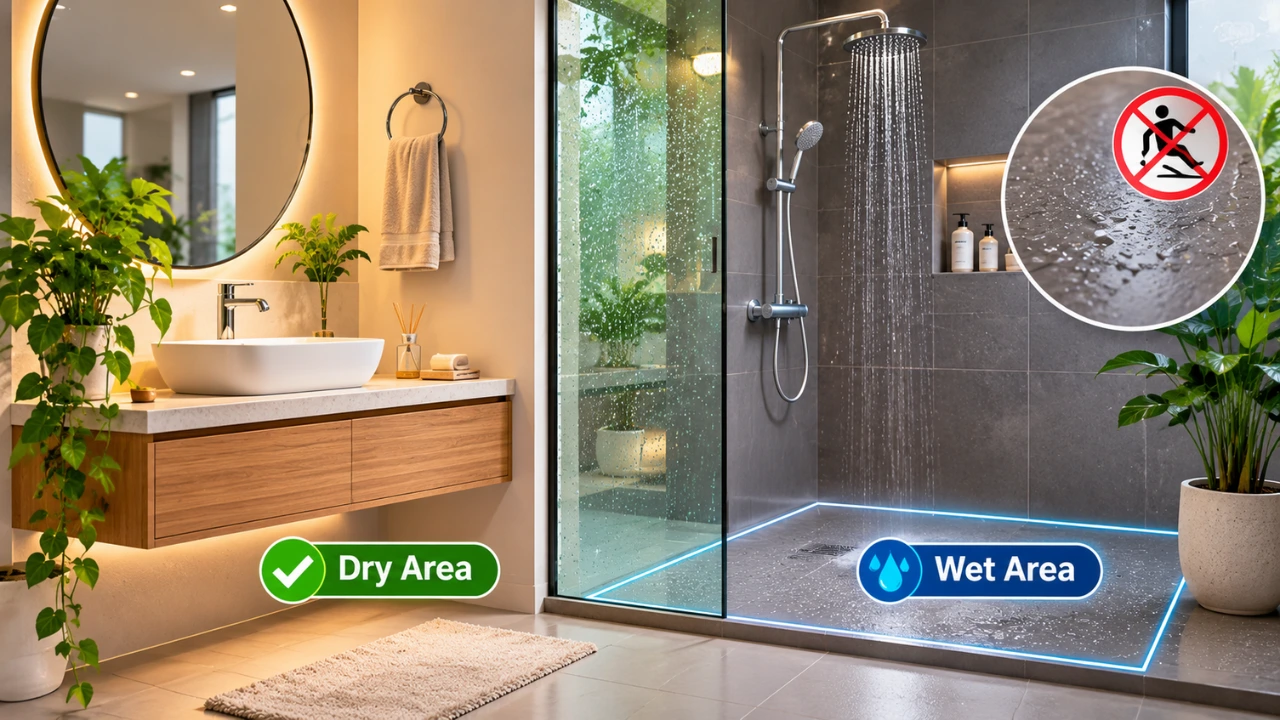
A wet bathroom floor isn’t just annoying. It’s one of the most common causes of slips and falls at home, especially for children and older family members. The good news is that a smart layout can fix much of the problem. By separating your bathroom into a “dry” area and a “wet” area, you can keep water where it belongs and make the whole space safer, cleaner and easier to use. Here’s how it works.
What Are Dry and Wet Bathroom Areas?
A wet area is the part of the bathroom where water is used freely, mainly the shower and bathtub.
A dry area is where you want floors to stay dry, such as the toilet, washbasin, vanity and storage space.
When these zones are mixed together, water from the shower spreads across the whole floor. When they’re separated, splashes stay contained, and the rest of the bathroom stays dry and safe to walk on.
Why Separating the Zones Matters
The biggest benefit is safety. A dry floor around the toilet and sink means fewer slips, especially at night or first thing in the morning.
It also keeps the bathroom cleaner. Less water on the floor means fewer muddy footprints, less mould and less damage to wooden cabinets and doors.
And it’s more practical for shared bathrooms. One person can shower while another uses the sink without stepping into a puddle.
Smart Ways to Separate Wet and Dry Areas
There are several ways to create a clear divide, depending on your space and budget:
- Glass shower partitions: A fixed glass panel or shower enclosure is the most effective way to stop splashes. Clear glass also keeps a small bathroom feeling open.
- Shower curtains: A budget-friendly option. Choose a weighted or longer curtain to keep water from escaping.
- A raised step or lowered shower floor: A slight level change helps keep water inside the shower area.
- Bathtub screens: If you shower in the bath, a fold-out screen stops water from spraying onto the floor.
Tip: Place the shower at the far end of the bathroom, away from the door. That way, you don’t have to walk through the wet area to reach the toilet or sink.
Choose the Right Flooring and Drainage
Even with good separation, the wet area needs to drain properly.
The shower floor should slope gently towards the drain, so water doesn’t pool. A long linear drain along one edge can work well, especially in walk-in showers.
Choose tiles that are made for wet areas and offer good slip resistance. Matte or textured finishes give better grip than glossy tiles. Smaller tiles with more grout lines can also add extra traction under bare feet.
In the dry area, you can use the same tiles for a seamless look, but keep a quick-drying, non-slip bath mat just outside the shower.
Extra Safety Features to Consider
A few small additions can make a big difference, especially for older adults or anyone with limited mobility:
- Grab bars near the shower, bath and toilet for support
- Good lighting so wet patches are easy to see
- A shower seat for those who need to sit while bathing
- Good ventilation, such as an extractor fan or window, to dry the room faster and reduce mould
Keep toiletries within easy reach inside the shower using niches or shelves. This stops people from stretching or stepping out mid-shower.
Tips for Small Bathrooms
Small bathrooms can still have wet and dry zones. A slim glass panel instead of a full enclosure saves space while still blocking splashes.
Wall-mounted toilets and floating vanities free up floor space and make cleaning easier.
If space is very tight, some homes use a fully waterproofed “wet room” design. In this case, the whole room is built to handle water, so proper waterproofing and drainage are essential. It’s best to get a professional to install it.
Frequently Asked Questions
What is a wet and dry bathroom?
It’s a layout that separates the shower or bath (wet area) from the toilet and sink (dry area) to keep most of the floor dry.
What’s the best way to separate a shower area?
A glass partition or shower enclosure is the most effective, while a shower curtain is a cheaper option.
What tiles are best for preventing slips?
Matte or textured tiles designed for wet areas offer better grip than glossy tiles.
Can I have wet and dry zones in a small bathroom?
Yes. A single glass panel, a well-placed shower and wall-mounted fixtures help create zones without taking up much space.