Buying furniture can feel exciting until you get a sofa home and realise it doesn’t fit through the door, clashes with your floors, or is too stiff to relax on. Good furniture should look great, suit the way you live and last for years. Here’s a practical guide to choosing pieces you’ll actually love living with.
Start With How You Live
Before thinking about colours or styles, think about your daily routine.
Do you have kids or pets? Do you often host friends? Do you work from home? Your answers shape everything, from fabric choices to how many seats you need.
For example, a family with young children may want a washable or stain-resistant sofa, while someone who entertains a lot might prioritise an extendable dining table.
Measure Before You Buy
This is the step people skip most often, and regret most.
Measure your room’s length, width and ceiling height. Then measure doorways, hallways, staircases and lift entrances, because furniture has to get in before it can fit.
A few helpful spacing guidelines:
- Leave roughly 75–90 cm for main walkways
- Keep about 45 cm between a sofa and coffee table
- Allow around 90 cm behind dining chairs so people can sit and stand easily
Tip: Use masking tape on the floor to mark out a piece’s size before buying. It shows you exactly how much space it will take up.
Choose the Right Materials
The material affects how long a piece lasts, how it looks and how much care it needs.
Common Furniture Materials Compared
| Material | Pros | Cons | Best For |
|---|---|---|---|
| Solid wood | Strong, long-lasting, can be refinished | Heavier and more expensive | Dining tables, beds, cabinets |
| Engineered wood (MDF, particleboard) | Affordable, smooth finish | Less durable, damaged by water | Shelving, budget pieces |
| Metal | Sturdy, modern look | Can feel cold, may rust outdoors | Chairs, frames, industrial styles |
| Rattan or cane | Light, natural texture | Less sturdy under heavy use | Accent chairs, sunrooms |
| Leather | Durable, easy to wipe clean | Higher cost, can scratch | Sofas in homes with kids |
| Performance fabric | Stain-resistant, comfortable | Varies in quality | Busy family living rooms |
Check the Quality
Price doesn’t always equal quality, so look closer before you buy.
For wooden pieces, check the joints. Dovetail or mortise-and-tenon joints are signs of good craftsmanship, while staples and glue alone are not.
Open drawers to see if they glide smoothly. Push gently on tables and chairs to check for wobbling.
For sofas, sit on them for a few minutes. Check the cushion firmness, seat depth and back support. Ask what the frame is made of, as a hardwood frame usually lasts longer.
Keep a Consistent Style
Your furniture doesn’t need to match perfectly, but it should feel like it belongs together.
Pick a general style you like, such as modern, classic, Scandinavian or rustic, and use it as a guide.
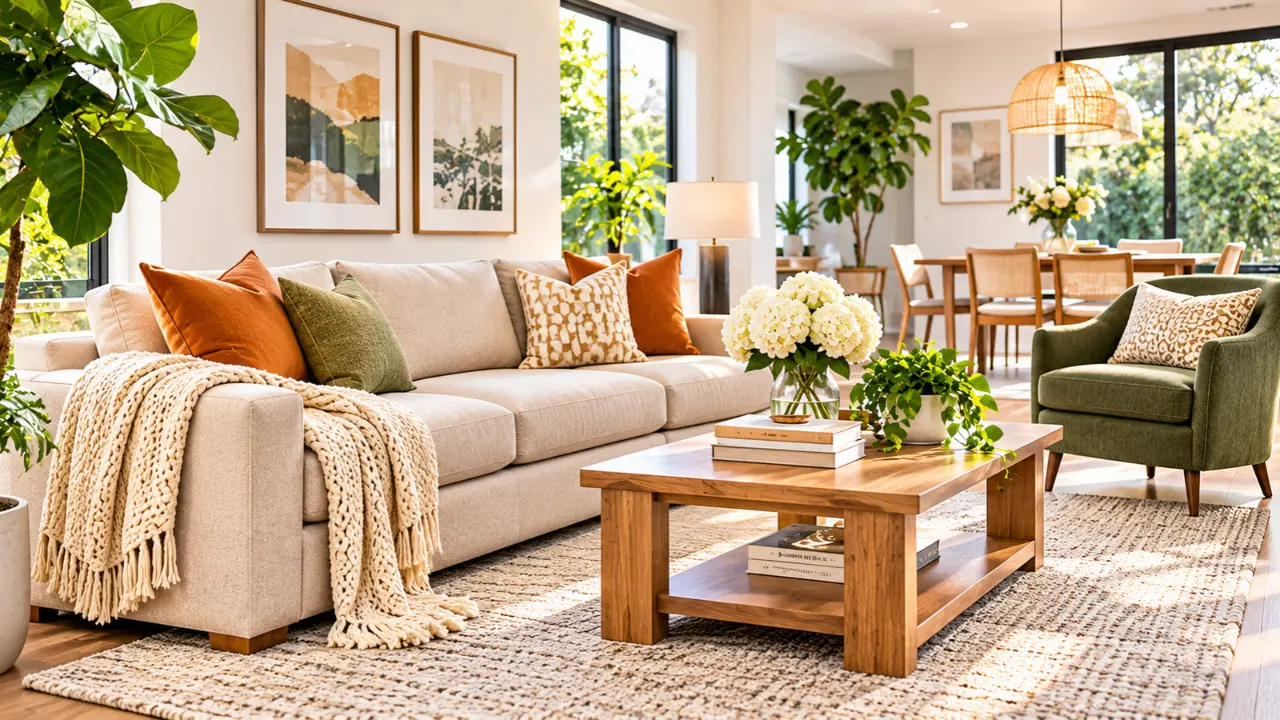
Stick to a simple colour palette. Neutral colours for big pieces like sofas and beds make it easy to update your look later with cushions, throws and rugs.
Make the Most of Small Spaces
If your home is compact, choose furniture that works hard.
- Beds with built-in storage drawers
- Ottomans that open for storage
- Extendable or drop-leaf dining tables
- Sofa beds for guests
- Wall-mounted shelves to free up floor space
Raised furniture on legs also makes a room feel more open, because you can see more of the floor.
Set a Realistic Budget
Decide how much you want to spend before you shop, and focus your money where it matters most.
Spend more on pieces you use every day, like your bed, mattress and sofa. You can save on décor items, side tables or accent pieces that are easy to replace later.
Frequently Asked Questions
What furniture should I buy first?
Start with the essentials you use daily, such as a bed, sofa and dining table, then add smaller pieces over time.
Is solid wood better than MDF?
Solid wood is usually stronger and lasts longer. MDF is cheaper and fine for lighter-use items like shelves.
How do I choose a sofa that lasts?
Look for a sturdy frame, good-quality cushions and a fabric suited to your lifestyle, then test it in person if you can.
How can I make a small room look bigger?
Use furniture with visible legs, choose lighter colours and pick multi-purpose pieces with built-in storage.
Conclusion
The right furniture balances comfort, function and style. Start with how you live, measure carefully, choose materials that suit your home and invest in the pieces you use most. Take your time, and you’ll end up with a home that feels both beautiful and easy to live in.