

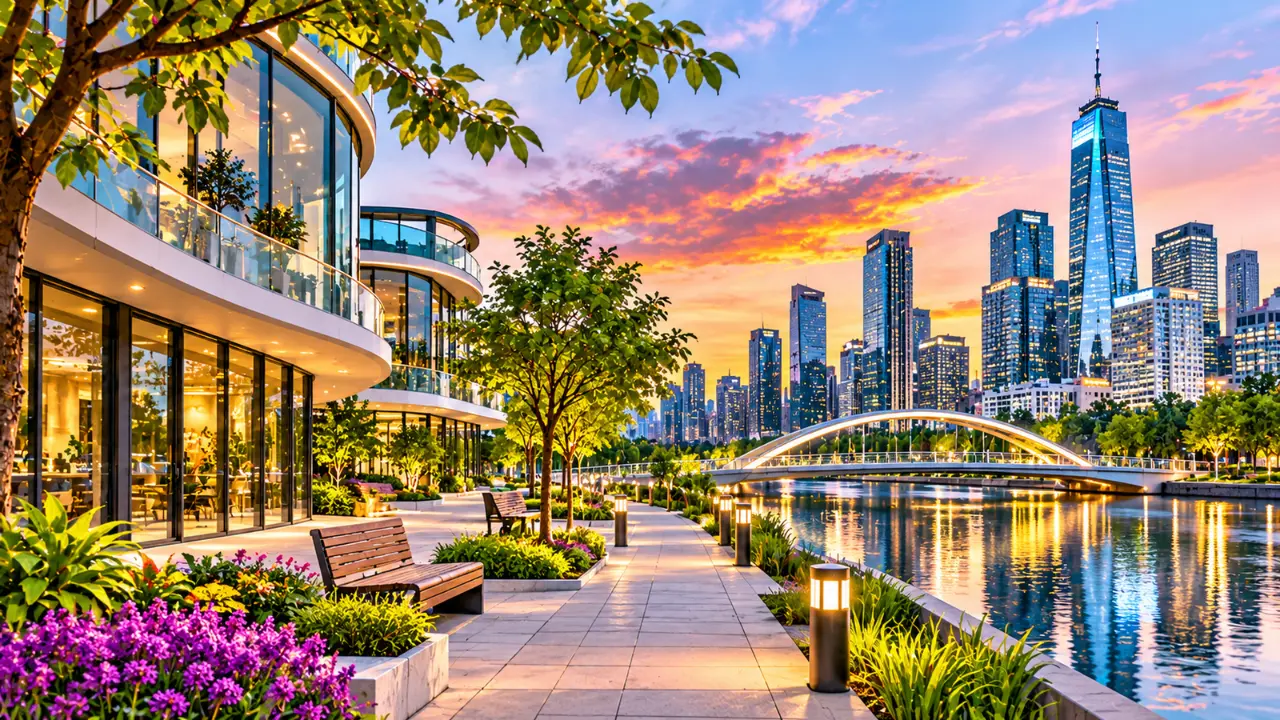
Cities aren’t just concrete and traffic. Some of the world’s most inspiring places are urban spaces where bold architecture and green landscapes come together. From parks built on old railway lines to towers covered in trees, these projects show how cities can be beautiful, sustainable and full of life. Here’s a look at some incredible urban architecture and landscapes, and what makes them so special.
What Makes Urban Design Truly Great?
The best urban spaces do more than look impressive in photos. They make daily life better for the people who use them.
Great urban design often combines a few key ideas: green space in the middle of the city, smart reuse of old structures, and places where people can walk, gather and relax.
Many of today’s standout projects also focus on sustainability, helping cities stay cooler, cleaner and more connected to nature.
Gardens by the Bay, Singapore
Gardens by the Bay is one of the most striking urban landscapes in the world. Opened in 2012, it sits on reclaimed land in the heart of Singapore.
Its most famous features are the Supertrees, giant tree-like structures covered in plants that light up at night. Two huge glass conservatories, the Flower Dome and Cloud Forest, house plants from around the world.
It’s a great example of how a city can blend nature and technology on a dramatic scale.
The High Line, New York City
The High Line turned an abandoned elevated railway on Manhattan’s west side into a public park. The first section opened in 2009.
Today, visitors walk along a path lined with wild-style planting, art and seating, all above the busy streets. It has inspired similar projects in cities around the world.
It shows how old infrastructure can find a new life instead of being torn down.
Bosco Verticale, Milan
Bosco Verticale, or “Vertical Forest”, is a pair of residential towers in Milan designed by architect Stefano Boeri. Completed in 2014, the buildings have trees and plants growing on their balconies.
The greenery helps provide shade, supports birds and insects, and softens the look of the city skyline.
It’s become a symbol of how high-rise living can include nature too.
Cheonggyecheon Stream, Seoul
In Seoul, a busy elevated highway once covered an old stream. In 2005, the city removed the road and restored the waterway, creating a long public space through the city centre.
Now, people stroll along the water, sit by its edges and enjoy events and lights in the evening.
It’s a powerful example of a city choosing people and nature over cars.
Zeitz MOCAA, Cape Town
Africa has its own stunning examples of urban reinvention. The Zeitz Museum of Contemporary Art Africa in Cape Town opened in 2017 inside a historic grain silo at the V&A Waterfront.
Designers carved out the old concrete tubes to create a dramatic, cathedral-like atrium, while keeping much of the building’s industrial character.
It shows how heritage buildings can be transformed into modern cultural landmarks.
Trends Shaping the Cities of Tomorrow
Looking at these projects, a few clear trends stand out:
- Green buildings: More rooftops, walls and balconies are being covered with plants
- Adaptive reuse: Old factories, railways and warehouses are being turned into parks, museums and homes
- Walkable cities: More space is being given to pedestrians and cyclists
- Climate-smart design: Trees, water features and shade help keep cities cooler
These ideas are spreading worldwide, from big global capitals to smaller towns.
