Living in a small home doesn’t have to mean feeling cramped. With a few smart changes, even a compact flat or tiny house can feel more open, organised and comfortable. You don’t need a big renovation or a huge budget, just a fresh way of looking at the space you already have. Here are four practical ways to create extra space in small homes, plus a few common mistakes to avoid.
Why Small Homes Feel Cramped
Small homes often feel tight not because of their size, but because of how the space is used.
Clutter, bulky furniture and dark colours can make a room feel smaller than it is. Empty walls and unused corners are also wasted opportunities.
The goal is to make every part of your home work harder, while keeping it light and easy to move around.
1. Declutter First
The quickest way to gain space is to own less. Before buying any storage, sort through what you already have.
Go room by room and divide items into keep, donate, sell and throw away. If you haven’t used something in a year, think hard about whether you really need it.
Tackle one drawer, shelf or cupboard at a time so the job doesn’t feel overwhelming.
Tip: Try a “one in, one out” rule. Each time you bring something new home, let something old go.
2. Use Your Walls and Vertical Space
When floor space is limited, look up. Walls are one of the most underused areas in small homes.
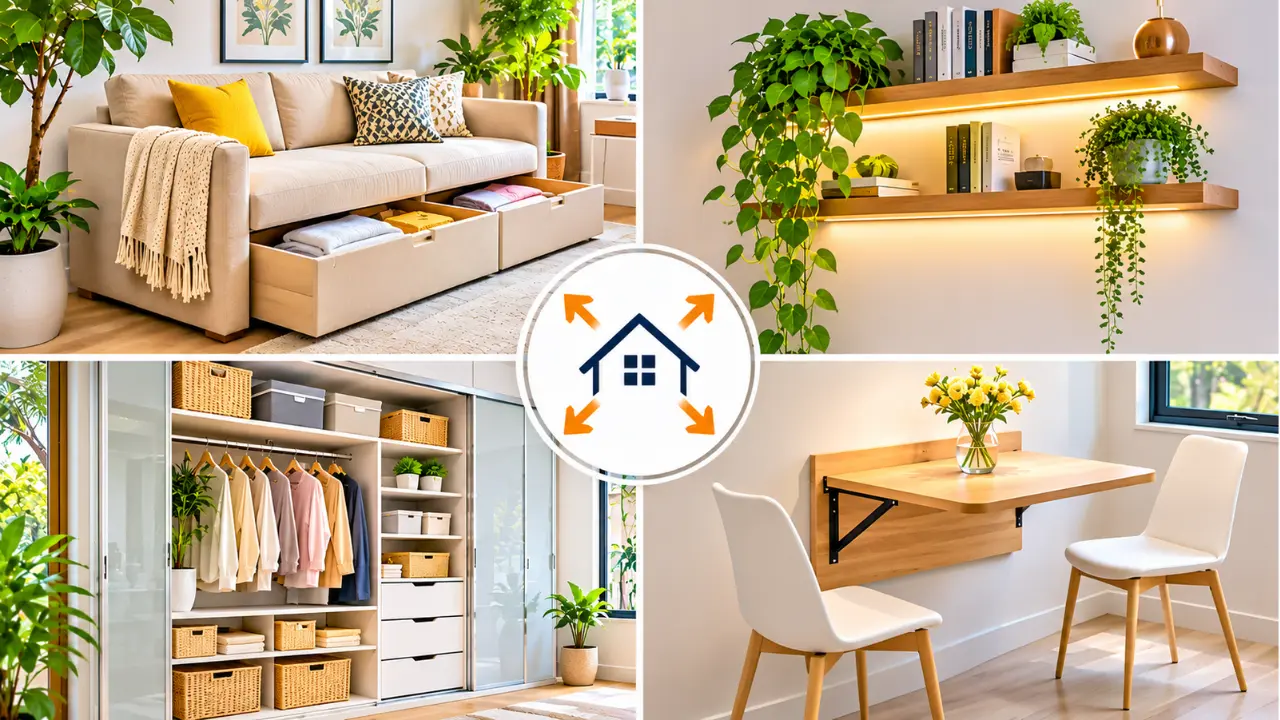
- Fit floating shelves above desks, sofas and toilets
- Use tall, narrow bookcases instead of wide, low ones
- Hang hooks or pegboards for bags, coats and kitchen tools
- Add over-the-door organisers for shoes, cleaning supplies or pantry items
- Mount your TV on the wall to free up a cabinet
In the kitchen, magnetic knife strips and hanging rails for utensils clear valuable counter space.
3. Choose Furniture That Does Double Duty
In a small home, every piece of furniture should earn its place.
Look for items that offer storage or serve more than one purpose, such as:
- Beds with drawers or lift-up storage underneath
- Ottomans and benches that open for storage
- Sofa beds for guests
- Fold-down wall desks or drop-leaf tables
- Nesting tables that tuck away when not in use
Furniture on raised legs also helps, as seeing more floor makes a room feel bigger.
4. Use Light, Colour and Mirrors
Sometimes creating space is about how a room feels, not just how much you can fit in it.
Light colours on walls and ceilings reflect light and make rooms feel more open. Whites, soft greys and pale neutrals work well.
Hang mirrors opposite windows to bounce natural light around the room. Swap heavy curtains for lighter fabrics or blinds to let in more daylight.
Good lighting matters too. Layer ceiling lights, lamps and wall lights so corners don’t feel dark and closed in.
Space-Saving Ideas by Room
| Room | Quick Space-Saving Idea |
|---|---|
| Living room | Wall-mounted TV, storage ottoman, floating shelves |
| Bedroom | Under-bed storage, wall-mounted bedside shelves |
| Kitchen | Hanging rails, magnetic knife strip, stackable containers |
| Bathroom | Over-the-toilet shelving, shower caddies, door hooks |
| Entryway | Wall hooks, slim shoe rack, small bench with storage |
Common Mistakes to Avoid
Avoid filling a small room with lots of tiny pieces. Several small items can look more cluttered than one or two well-chosen larger ones.
Don’t block windows with furniture, as natural light is one of your best tools for making a space feel bigger.
And resist buying storage before decluttering. Otherwise, you’ll just end up organising things you don’t need.
Frequently Asked Questions
What is the fastest way to create more space in a small home?
Decluttering. Removing items you don’t use instantly frees up space without spending money.
Do mirrors really make a room look bigger?
Yes. Mirrors reflect light and views, which makes a room feel brighter and more open.
What colours make a small room look bigger?
Light, soft colours like white, cream and pale grey help reflect light and create a sense of space.
What furniture is best for small homes?
Multi-purpose pieces, like storage beds, sofa beds and fold-down tables, make the most of limited space.
Conclusion
A small home can feel spacious with the right approach. Start by decluttering, then make use of your walls, choose furniture that works twice as hard and brighten things up with light colours and mirrors. Small changes add up, and you’ll soon have a home that feels calmer, more organised and much roomier.